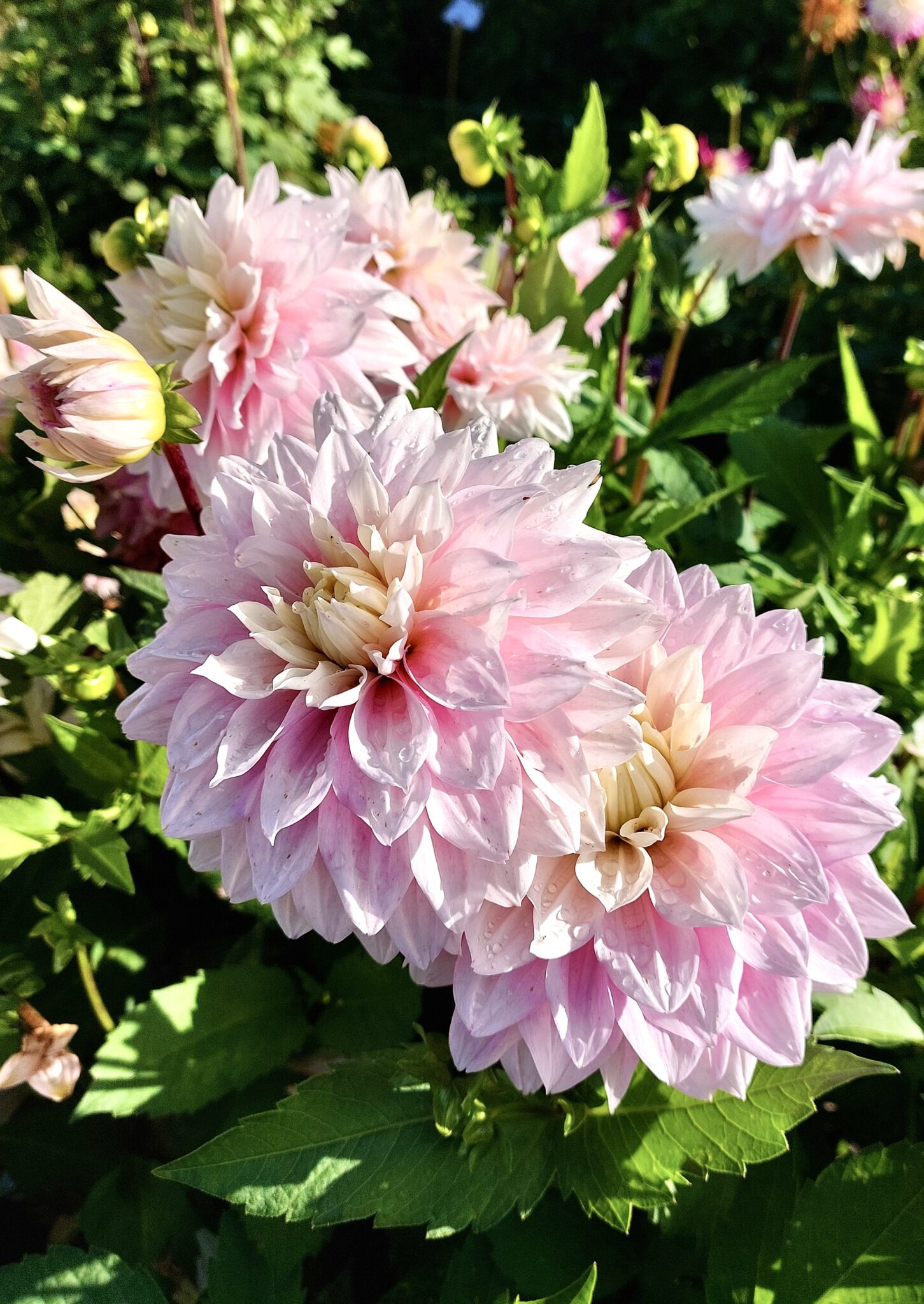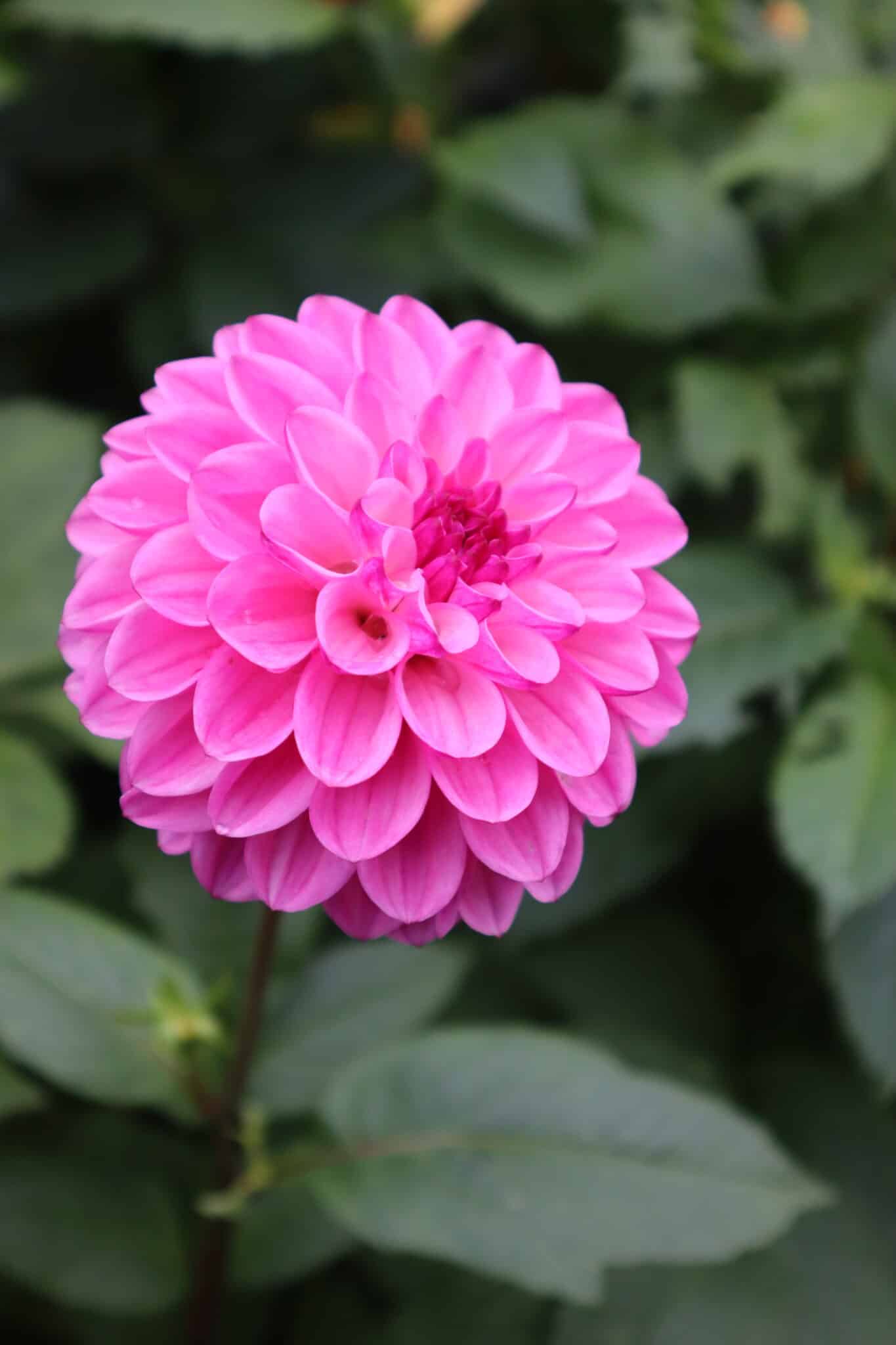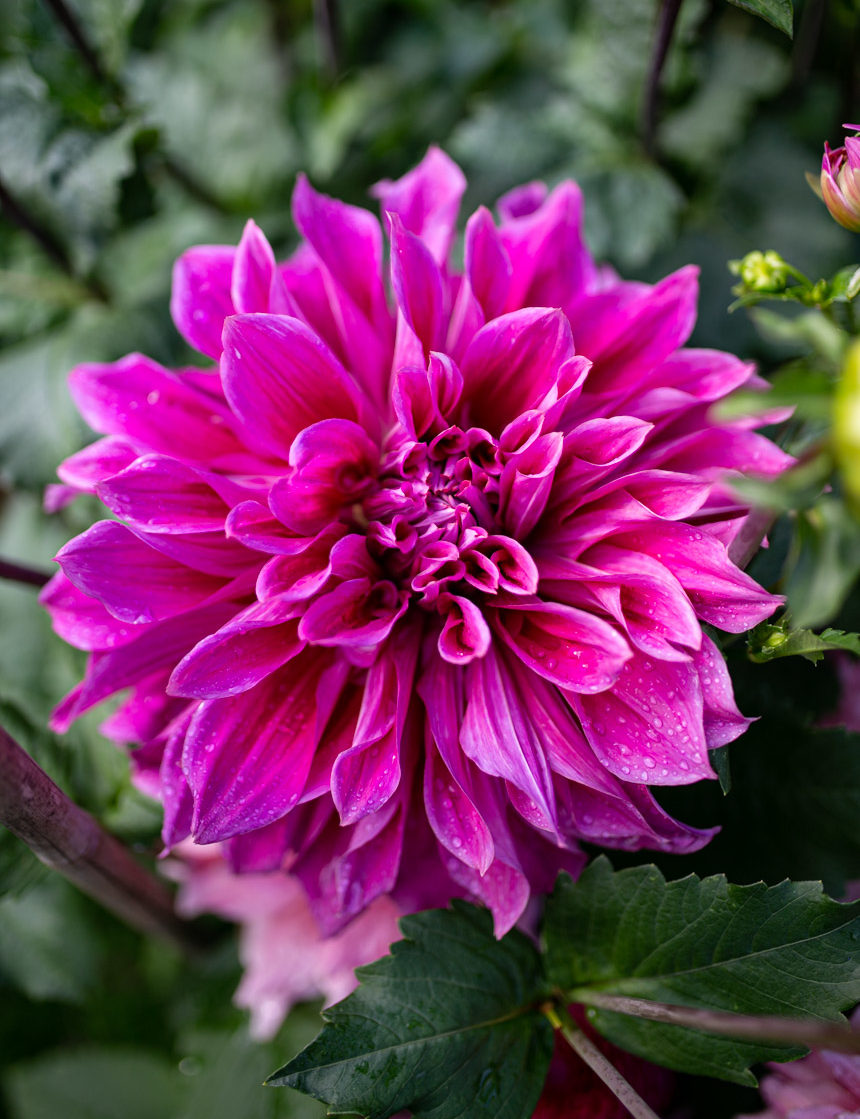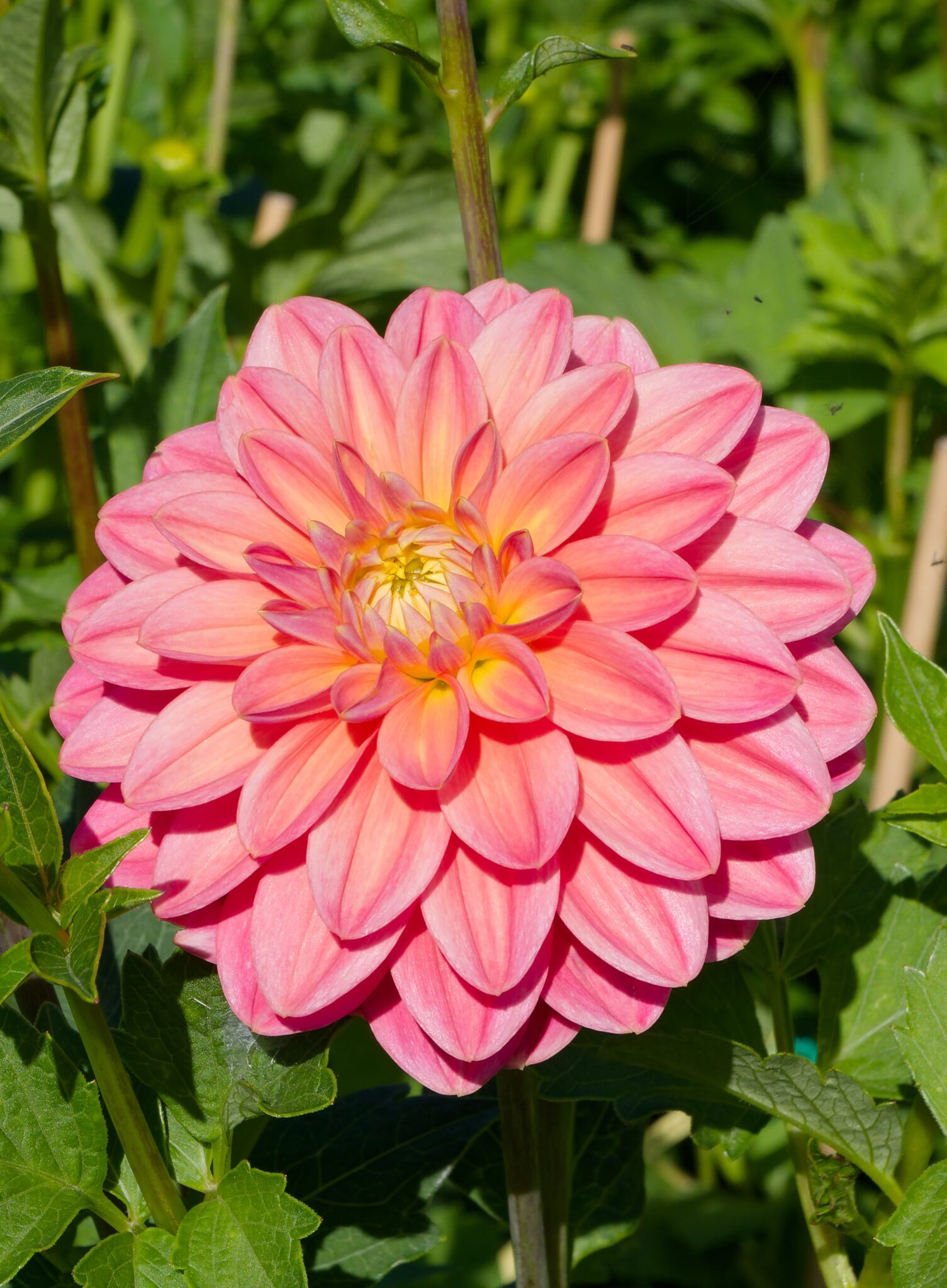


I grow dahlias in my garden for several summers now, and if you've never grown one before, I guarantee you'll quickly become fascinated by this multi-faceted flower!
To make your planting a success, I'm sharing my experience and my routine around the cycle of this unique flower.
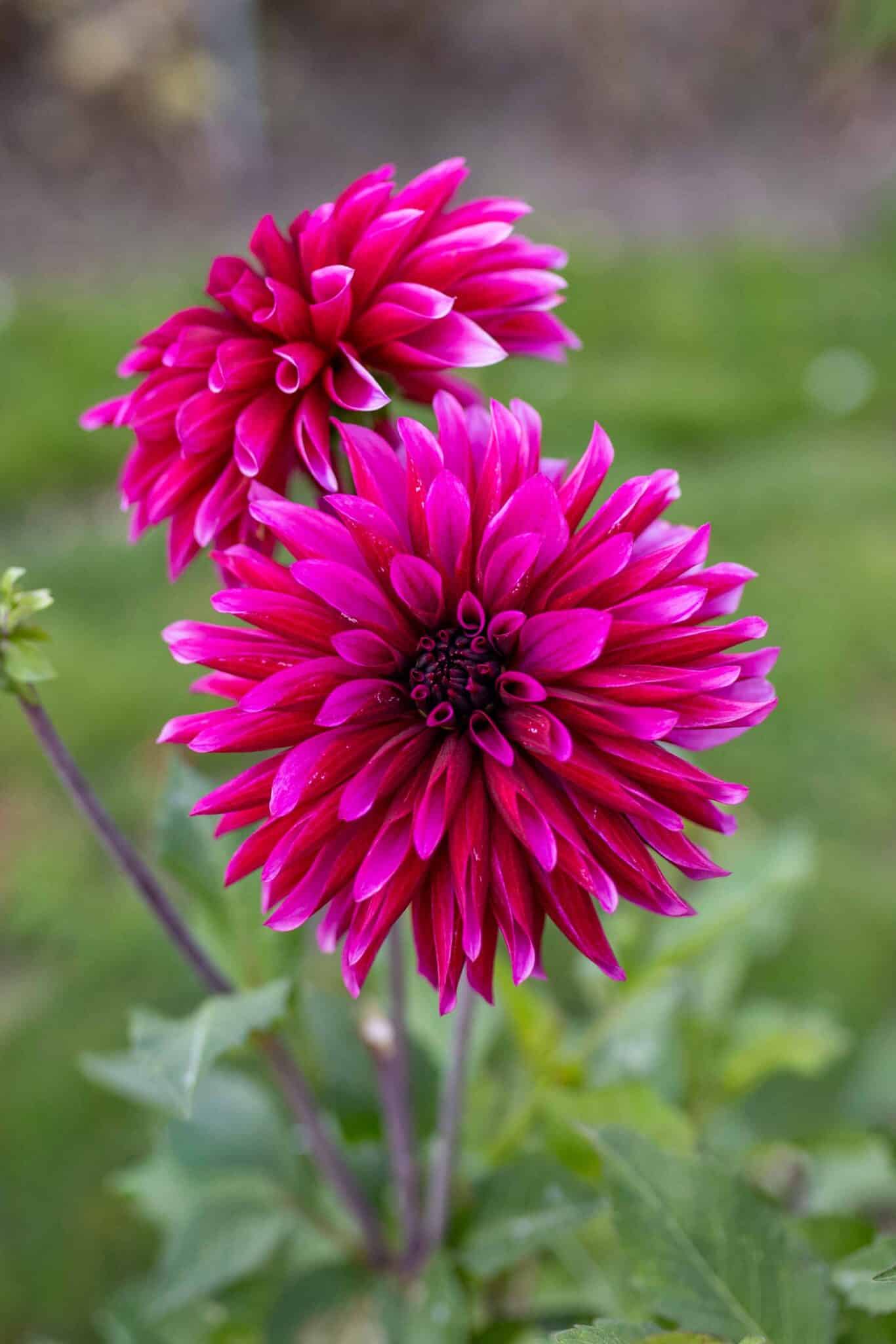
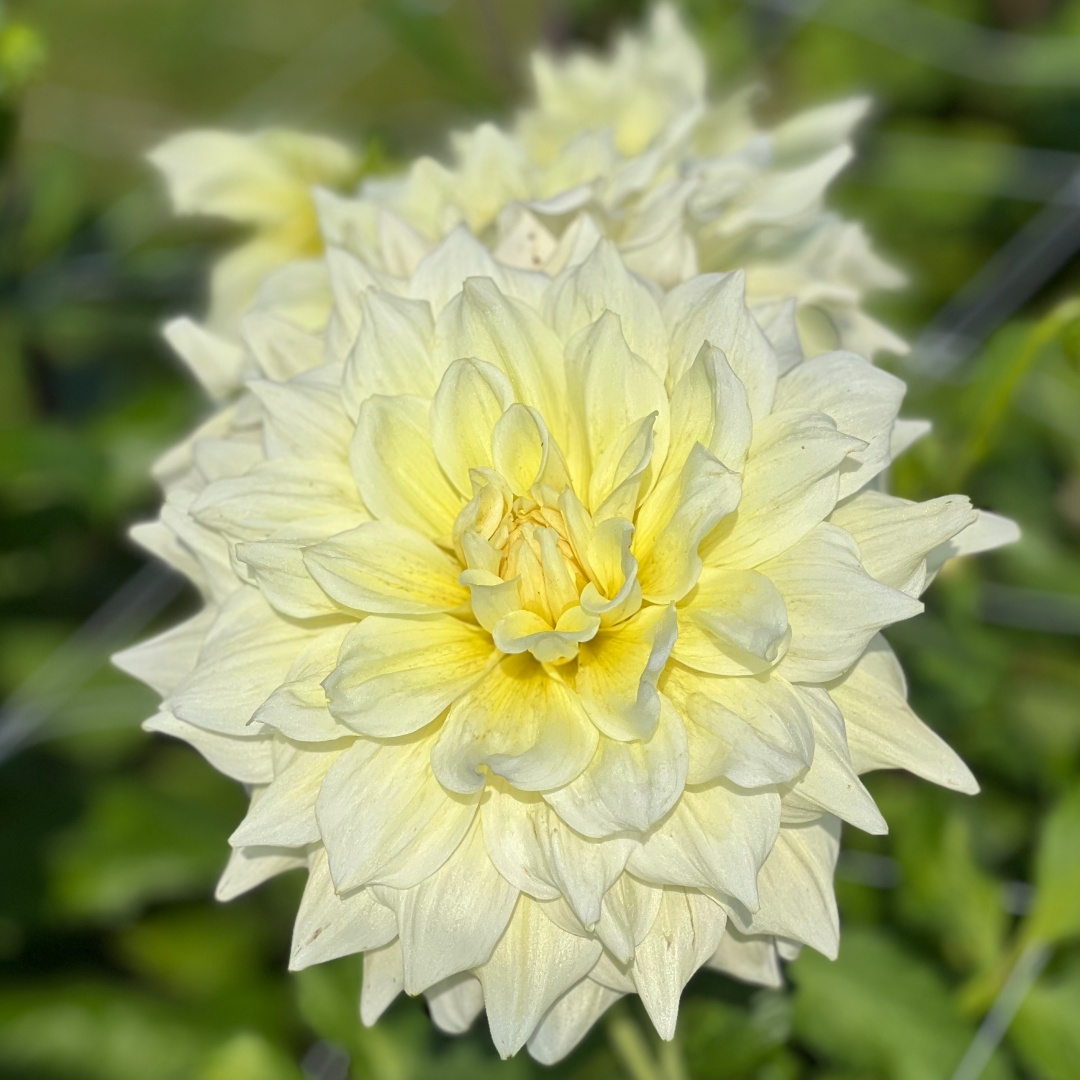
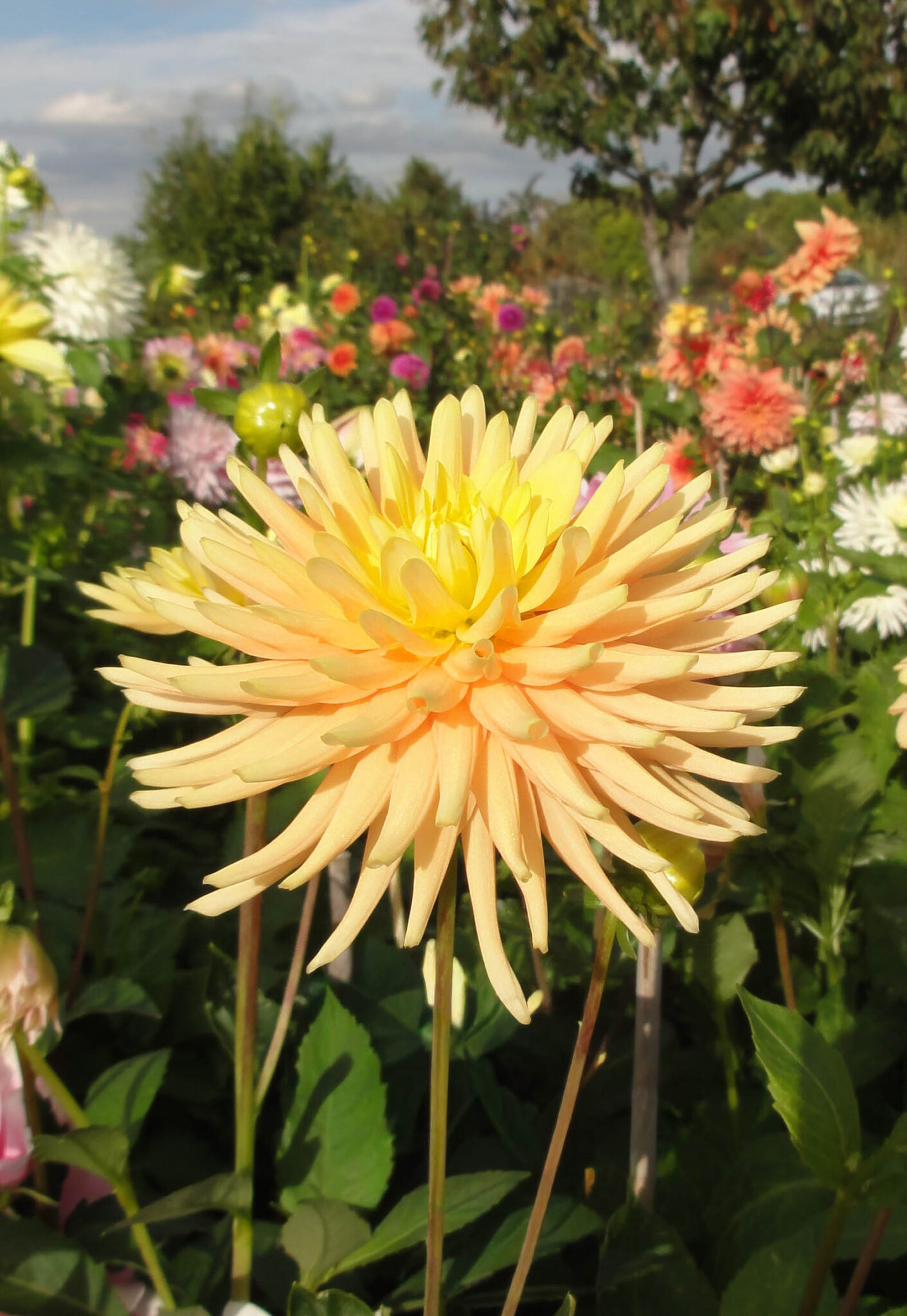
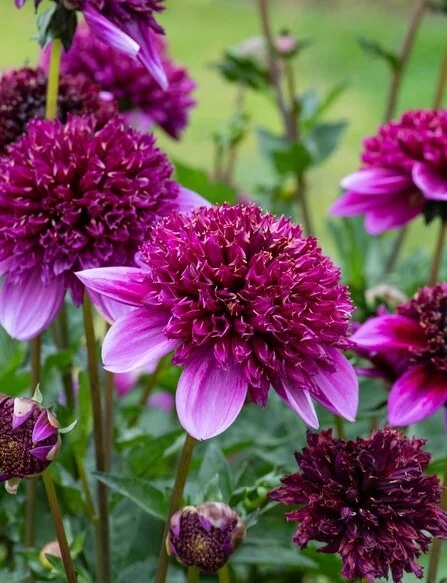
If you want to take the plunge, start by choosing dahlias that you like and whose colors go well together. Choose different shapes: pompom, decorative, camellia and so on. This will bring diversity to your bed and your future bouquets.
If you want to plant your dahlias on a balcony, opt for smaller varieties, so that you can plant them in smaller pots (15-20 liters instead of 25 liters). If you're undecided about your choice of flowers, opt for dahlias sold as a “collection” of several tubers. Once you're happy with your choice, it's time to start planting.
Plant your dahlias in your garden or in pots on your balcony, after the last spring frosts (late April - early May) in a sunny spot sheltered from the wind. Place the tuber in a hole 5 cm below the surface of the soil, stem upwards. Cover and water thoroughly. For an explosive effect, plant your dahlias “en masse” 40 cm apart, otherwise 80 cm will suffice.
If your garden soil is too clayey, loosen it with a mixture of 50% sand and 50% potting soil. Mulch to keep the soil moist and protect your tubers from late frosts.
For pot planting, you'll need a pot of at least 25 liters. The larger the pot, the more room the dahlia will have to feed and thrive. At the bottom of the pot, place clay balls for drainage and plant just one tuber per pot, 5cm below the surface. Dahlias don't like having guests at the same table!
Use topsoil rather than potting soil, to help retain water and reduce watering.
For large plants, I always install a stake as soon as they are planted: this avoids injuring the tuber as it grows and will support the plant, as the stems can be brittle and some flowers very heavy. I use bamboo stakes measuring 180cm and 2-3cm in diameter, but any other similar support will do.
Tie the plant to the stake as it grows, using thick, natural-fiber twine, but not too tightly. When the plant has reached full size, make sure it is well supported by the stake.
Here's a tip: do as I do, never forget to label your dahlias!
Use reusable labels to hang from the stake as soon as the plant is planted. Once the plant has flowered, check that the variety corresponds to the name on the label and move the label to a stem at the base of the plant. Once out of the ground, only a label will help you distinguish one variety from another, as dahlias all look alike.
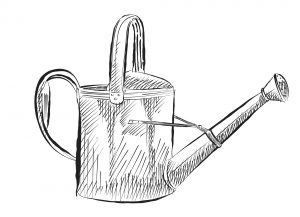
Of course, dahlias need water to thrive, but be careful not to over-water or the tuber will rot.
I water abundantly at planting and wait for the first stems to emerge before watering again. In the event of severe drought, I can water a second time before the first stems emerge.
Be careful not to over-water in the weeks following planting! During cultivation, I water once a week, early in the morning or at the end of the day, right at the base of the plant, to avoid wasting water. If you water too little, or if the soil doesn't retain water, you'll need to do so every 2-3 days.
In hot weather, I water every day, always avoiding wetting the leaves, which could develop cryptogamic diseases.
Once your dahlias reach 30-40cm, I cleanly prune the stems above the third pair of leaves. In this way, I stop the plant's apical growth in favor of lateral growth. Your dahlias will be much bushier and therefore more floriferous.
Dahlias are greedy plants! As soon as the first leaves appear, I spread slow-release granules of organic nitrogen fertilizer at the base of the plants. When the first buds appear, the menu changes: I use a granulated tomato fertilizer, still organic, with a higher potassium content to help the flowering process.
NB: stop fertilizing your dahlias at the end of August.

Dahlias are very appetizing plants for many pests, but don't panic, there are solutions to combat our hungry friends.
During the first month of your plants' growth, slugs and snails will be very attracted to young shoots (a real delicacy).
Once the tubers have been planted in the ground, use AB-compatible iron phosphate granules during the plant growth period.

Personally, I start using them as early as March, in the area where the tubers will be planted. Remove the mulch from your beds a week or so before planting, to help expose the gastropods to late frosts and their natural predators.
You can also use wood ash or coffee grounds around your plantations. For the more adventurous, like me, go out after dark with a flashlight to eliminate bugs by hand.
Much less of a pest, black aphids like to settle on young dahlia shoots. I spray the affected stems with a solution of black soap or rapeseed oil diluted 1/10 with water, when the sun is no longer beating down on the plants.
Earwigs like to hide in dahlia flowers, so they cut their way through the petals, but do almost no damage to the green part of the plant. I trap them by hanging a pot full of straw upside down on the stake. They take refuge inside and I empty the pot away from my plants.

To give my plants opulent flowers, I remove the buds to the right and left of the main bud. This allows the sap to expand the central bud, which will be better nourished. For more abundant, longer-lasting flowering, cut off the spent flowers. This way, the plant won't spend energy on producing seeds, but will use it to flower again.
After the first autumn frost, cut the stems of your dahlias to within 3 cm of the ground and remove them just as soon with a spading fork, taking care not to damage the tubers. Rinse them and leave them to dry, upside down, in a protected place where the temperature doesn't fall below 0°C. Dahlias are gelatinous plants.
Store your tubers in a place where the temperature fluctuates between 2°C and 8°C with a good level of humidity and sufficient ventilation.
In April, buds appear on the neck of the tuber. They are very fragile.
This is the right time to divide the plant using a knife, pruning shears or pruning shears.
Before dividing, check that your tubers are free of rot and in good condition.
Cut off any diseased or necrotic parts. Then make a clean cut between the tubers, so that each part has at least one bud. Repeat until the plant is completely divided.
Be careful not to misplace the name of the variety you are dividing. Clean the blade of your tool when you change feet to avoid transmitting any diseases to other plants.
Good planting