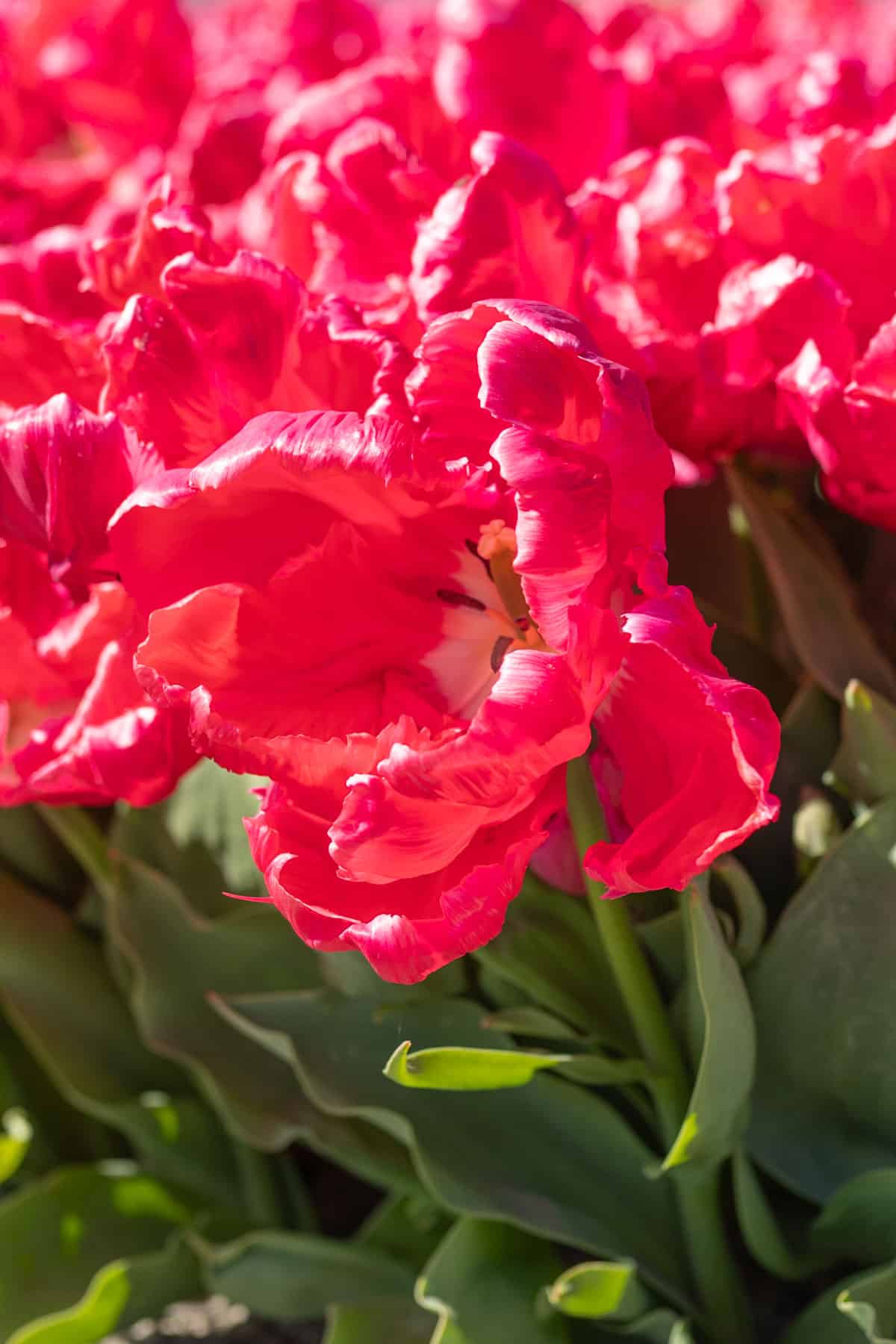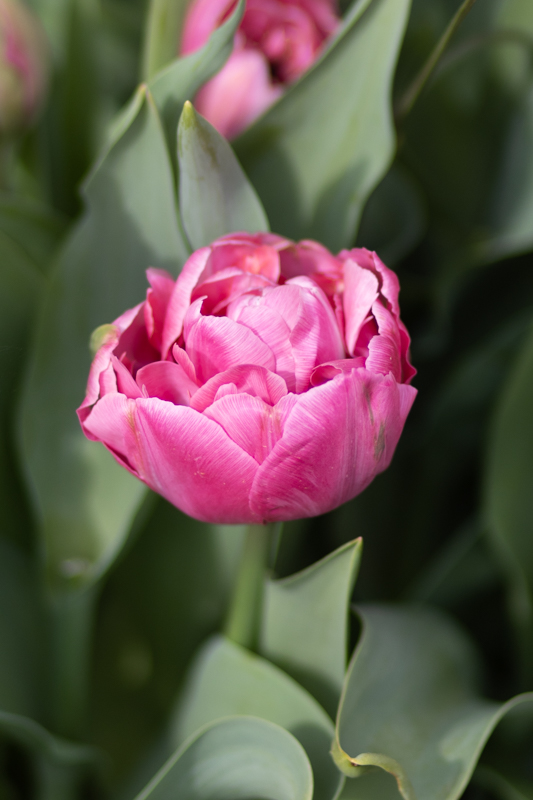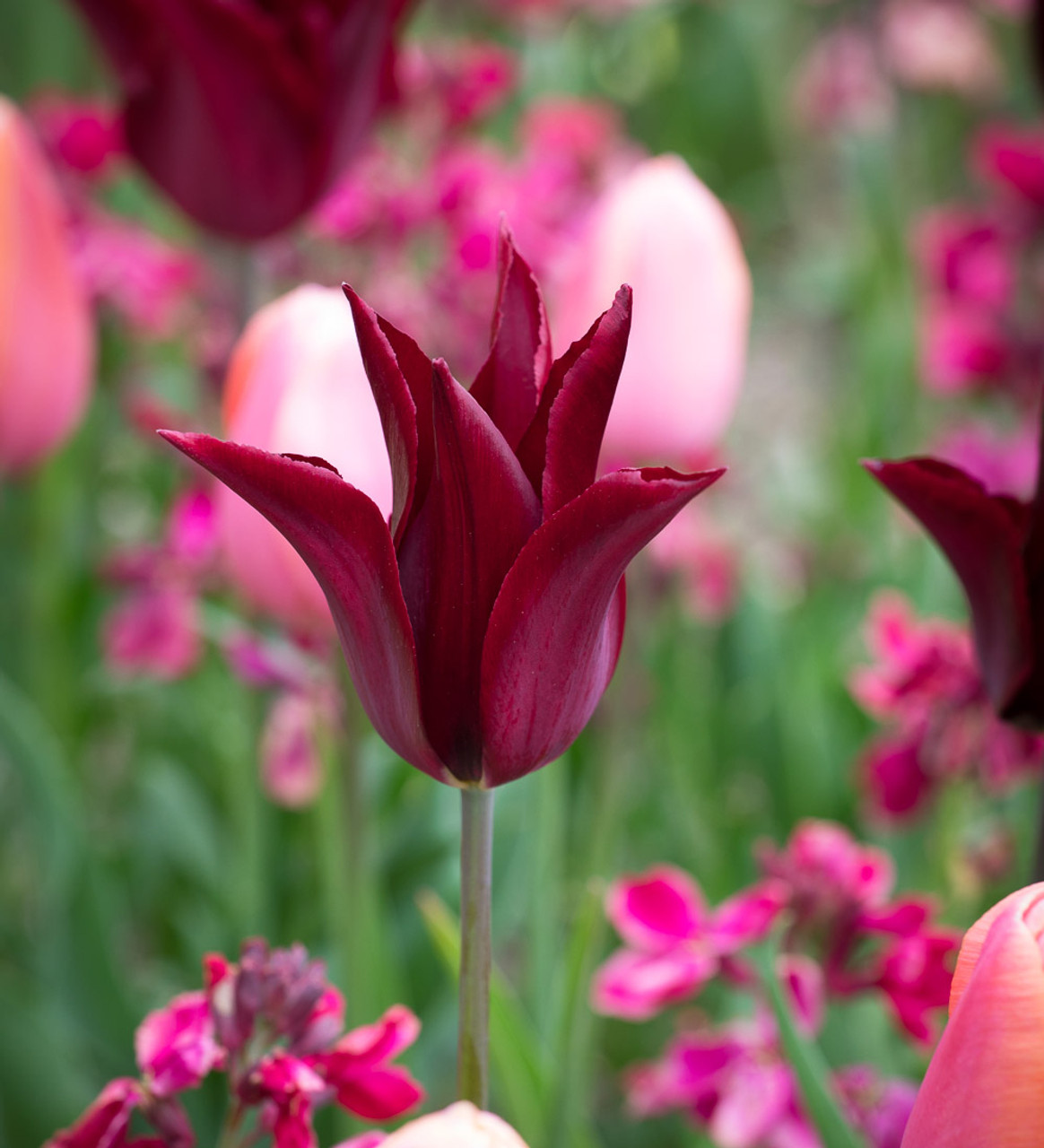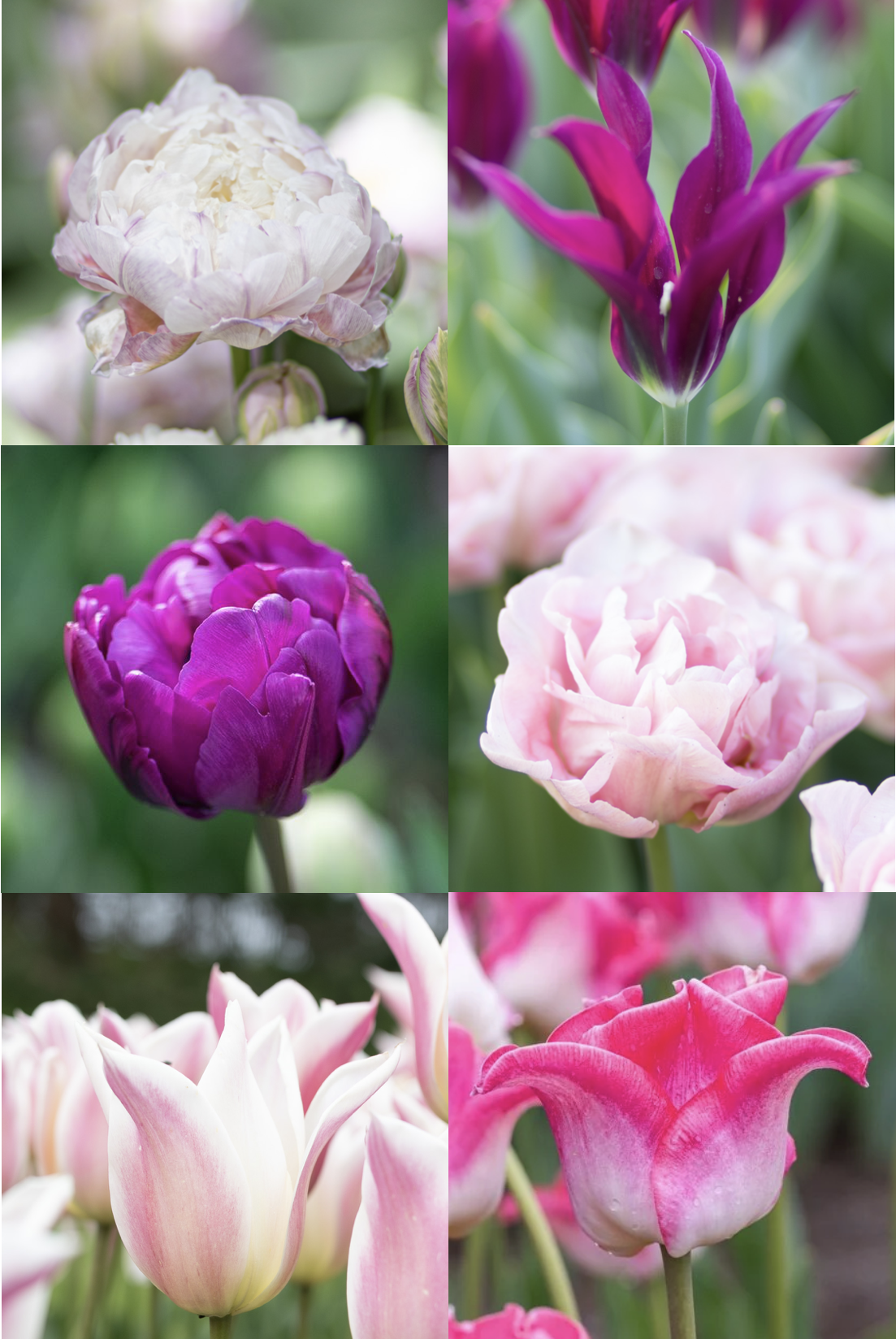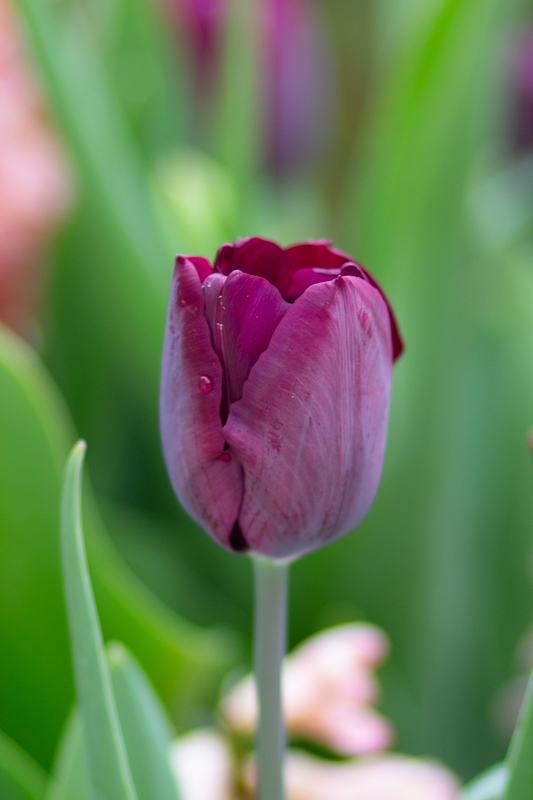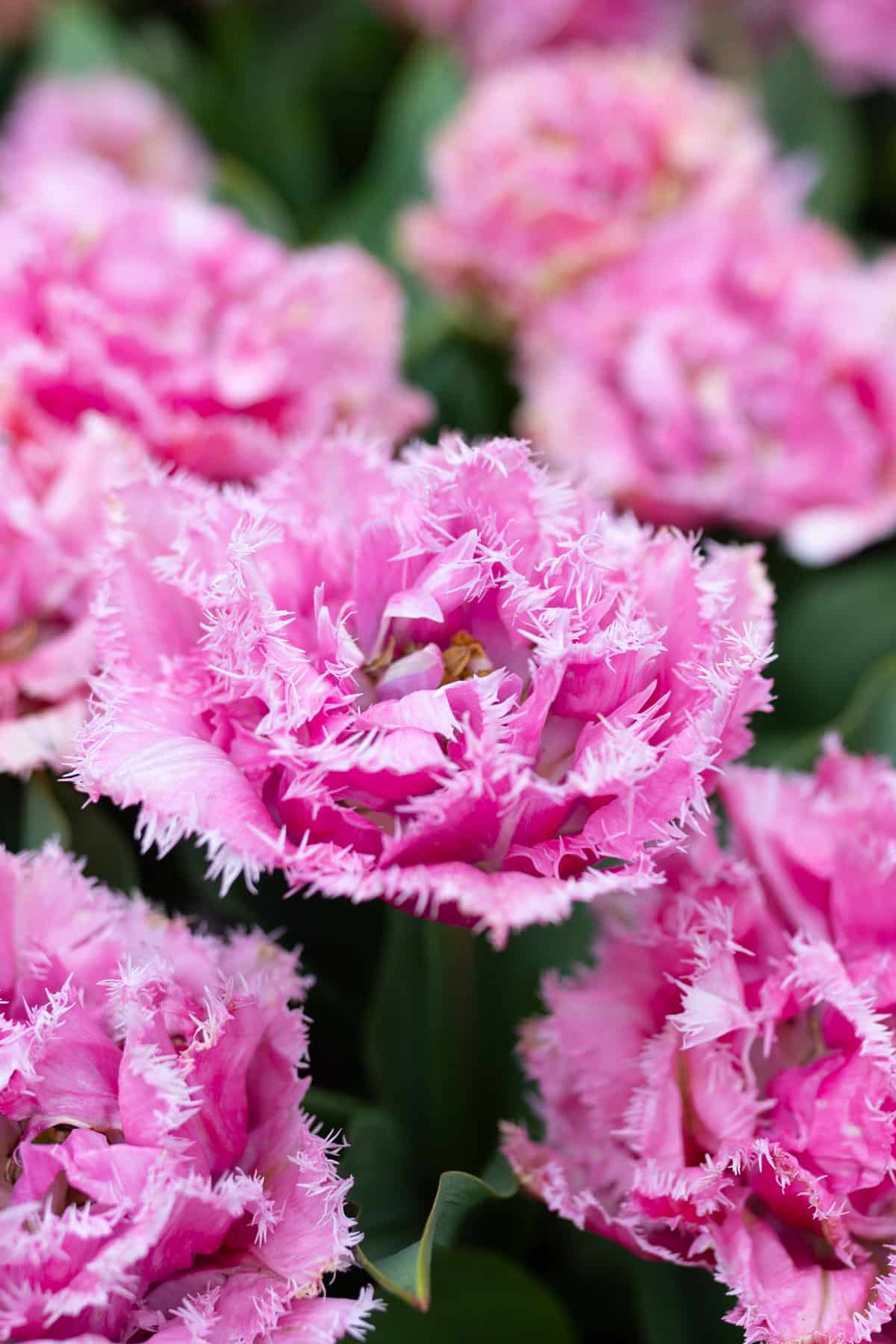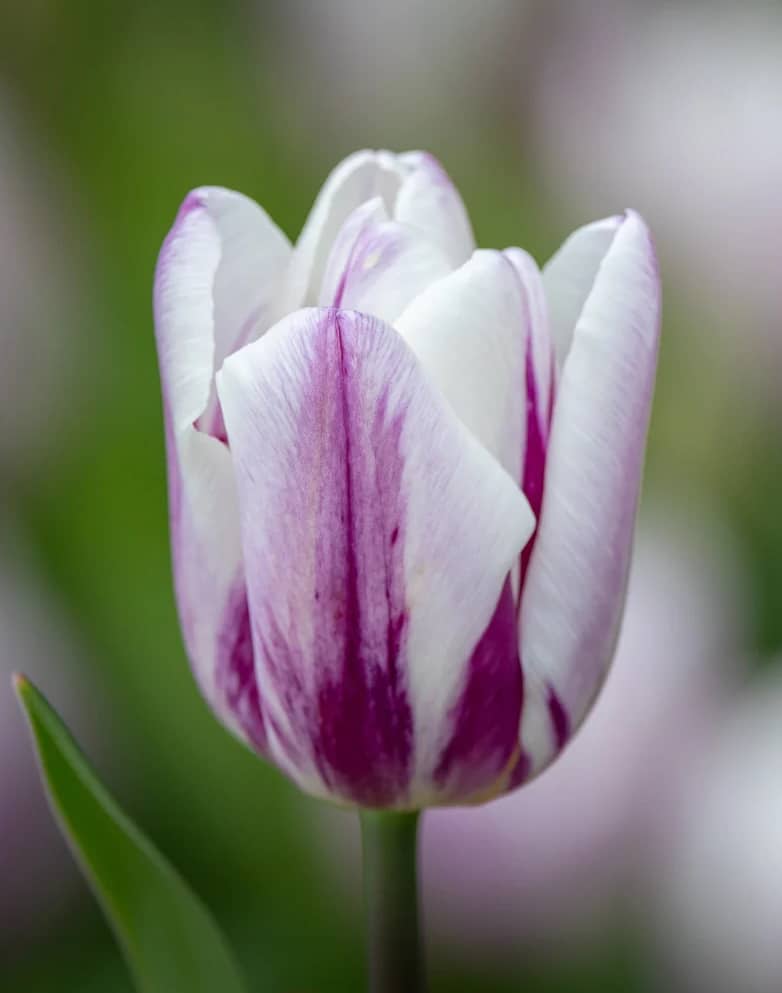


Tulips come in an incredible variety of shapes and colors. Some have fringed petals, others are pointed, and some are so ruffled and full that they are often mistaken for peonies. Some varieties even have a sweet, subtle fragrance. With so many wonderful qualities, it's no wonder that tulips are one of the most popular cut flowers on the market. One of the easiest spring bulbs to grow, they are a mainstay of gardens and balconies alike.
I plant hundreds of tulips every year. There are several different ways to grow these flowers, depending on whether you simply want to add color to your spring landscape, to pots on your balconies or simply harvest them in abundance for cut flowers. However you plant them, make sure you choose a spot that gets full sun and no standing water, as very wet soils will encourage disease and rot.
In the garden, tulips have the most impact when planted en masse. For a real show, I recommend abandoning the bulb planter and instead planting clumps of 10 bulbs.
Simply dig a generous circle of soil about 15 cm deep, mix in a little organic bulb fertilizer and compost, then plant your bulbs about three times as deep as they are tall. Tulips can be planted fairly close together, 2.5 cm apart, like eggs in a carton.
Once your bulbs are firmly in place, water deeply, then fill the hole with the soil you've removed. Add a few centimetres of well-ripened compost on top to act as a mulch. Be sure to insert a stake to remind you where you planted them.
I've found that planting bulbs much deeper has many advantages:
Tulips bloom more reliably year after year. In the bulb fields of Holland, tulips are planted close to the soil surface to encourage them to reproduce. The higher ground encourages bulb reproduction, with the mother bulb developing satellites, or bulblets, around its base. Once this has happened, most of its energy goes into these descendants, so the mother bulb will almost certainly not flower the following year, but the bulbils won't be big enough to flower for two or three years after that, resulting in a blind bulb.
If planted deeply, tulips are less likely to try to reproduce and are more likely to bloom year after year. This applies to my heavy clay soil, but it's even truer in freely drained sandy soils that warm up to a greater depth in summer.
(The same applies to growing tulips in pots - which is why you never get a good show from tulips left in containers year after year. If you're planting in pots, remove the bulbs and plant them in the ground as soon as they've finished flowering and summer. Leave the foliage intact, but remove the dead heads so the tulip doesn't waste energy trying to go to seed).
Staking is not necessary with deep planting. Even huge bulbs, like the ‘Ivory Floradale’ tulip, which can reach almost a meter with large, heavy flowers, won't need any support. The bulb is anchored so deeply in the soil that it works like a natural stake.
To achieve sublime, dense, flowering spring pots, you should try layering bulbs in what the Dutch call a ‘bulb lasagne’. The later-flowering bulbs go to the bottom of the pot, and the earlier-flowering ones are planted on the top layers.
The emerging shoots of the bulbs in the lower layer bend around whatever they hit, dodging the bulbs planted on their heads.
To do this, plant the bulbs 2-3 cm apart. The first layer can be planted 28-30 cm deep (always leave 10cm of soil and clay balls at the bottom of the pot). Then cover them with 5 cm of potting soil before placing the next layer of bulbs. Try to plant them in staggered rows to make it easier for the stems of the lower bulbs to emerge.
On average, it's possible to make 3 tiers of bulbs, which will provide flowers throughout the spring! Water and care for your tulips regularly, as they tend to need more care in pots than in the ground.
If your intention is to grow tulips solely for cutting, plant them in long rows or in a wide trench. Many growers grow the majority of their bulbs in trenches in tunnels to beat local competition to market, as they will flower almost a month earlier indoors in greenhouses. This indoor planting is followed by a smaller outdoor planting, extending their harvest window to almost 2 full months.
Dig a 90 cm trench 15 cm deep, placing the soil on one side. Sprinkle lightly with organic bulb fertilizer and rake, smoothing the bottom at the same time. Place bulbs pointed side up, like eggs in a carton, close together but not touching.
Once the bulbs have been planted, water them, allowing the trenches to fill at least halfway with water, which encourages vigorous root growth, helping to produce even larger flowers. Cover the trench, mulch the top with 2.5 to 5 cm of compost and lay irrigation lines, watering deeply several times throughout the winter. It's really quite simple!
In spring, when the bulbs start to grow in the soil, it's important to keep the beds weeded and start watering more regularly. For a longer vase life, harvest when the buds are just beginning to color, but before they are fully open. Harvest bulbs with the stem attached, for maximum stem length, extended storage and long vase life. In fact, with the bulb attached, tulips can be stored dry for up to 1 month in the fridge! Because they're always connected to their food source. When it's time to use them, cut off the bulb and place the stems in water.
GASPARDATABLE'S TIP
Tulips tend to bend a little after harvesting. To encourage stems to stay upright, wrap the top two-thirds of the flower in a paper funnel and stand them in water for a few hours. Tulips have a naturally long vase life, with many varieties lasting up to 10 days. Change the water frequently.
Once fully hydrated, freshly picked tulip stems continue to elongate for a few days, so if you're making a bouquet, be sure to fold the flowers deeper than necessary, bearing this in mind.
If you want your tulips to last, it's important to plant them deeper, 25-30 cm, and leave at least two sets of leaves on the stem when harvesting to replenish the bulb and give it energy to bloom the following season. Once the flowers have faded, cut off the flower tip to prevent the bulb from running out to produce seeds. Just note that for some varieties of tulip, the flowers may be of lesser quality in subsequent years.
It's important to leave the browning foliage on your tulips until each leaf has dried, usually in early summer. This allows the bulb to store more food and produce flowers the following year.
I've found no advantage in digging up tulip bulbs after flowering each year, so I leave them in place. In mid-June, I pick up all the dead stems and foliage, mulch with 5 cm of compost or well-decomposed manure and plant annuals like cosmos, sunflowers or vegetables like zucchinis or pumpkins on top of the tulips.
Good planting